
Services
Interiors
Construction services
Areas we cover
Services by area
Glass restoration
About us
Guide
What Is Tape and Jointing?
How tape and jointing gives plasterboard a seamless finish, and how it compares with plastering.
Tape and jointing gives a seamless finish to tapered-edge plasterboard and can be used on flat joints and on internal and external corners. It is a popular alternative to plastering because it is often quicker and more cost-effective.
How it is done
Jointing tape is bedded over the joint or internal corner
Two coats of joint filler are applied and feathered out
A finishing coat of joint cement gives a smooth, seamless finish
Joints are sanded to leave a flat surface ready for paint
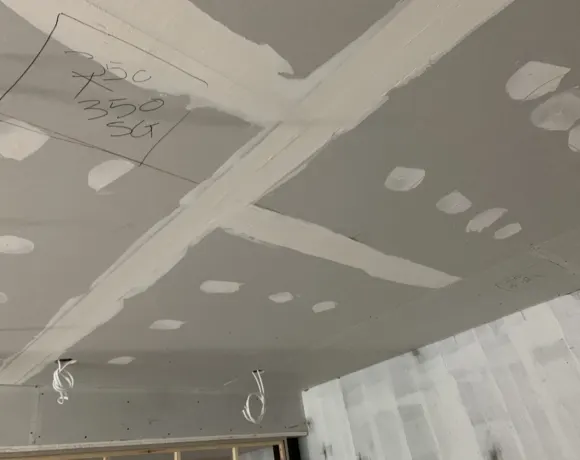
Benefits compared with plastering
Material only goes on the joints, a fraction of what plastering uses, so the process is cleaner and faster. Tapers and jointers can also work alongside other trades, which helps projects finish sooner. A plaster skim, on the other hand, gives a harder surface and adds to fire protection, so the specification decides which finish is used.
Where tape and jointing is essential
Many bulkheads, troughs and features with difficult access are specified for a jointed finish, as are some specialist boards. Snagging, patching and rectification are also done with tape and jointing methods, and fire taping seals joints to maintain fire protection according to the fire strategy drawings.
Need tape and jointing in Manchester or the North West? See our tape and jointing services or call 0161 710 2510.
Need help with a project?
Tell us about your project, the site location and your timescale. Call, WhatsApp or email us, or send the form and we will get back to you.
4 Kingston Mill, Cobden Street, Salford, M6 6WG, Greater Manchester, UK
074 133 50 960
0161 710 2510
info@drywallmachines.co.uk
Monday to Friday: 8am to 5pm